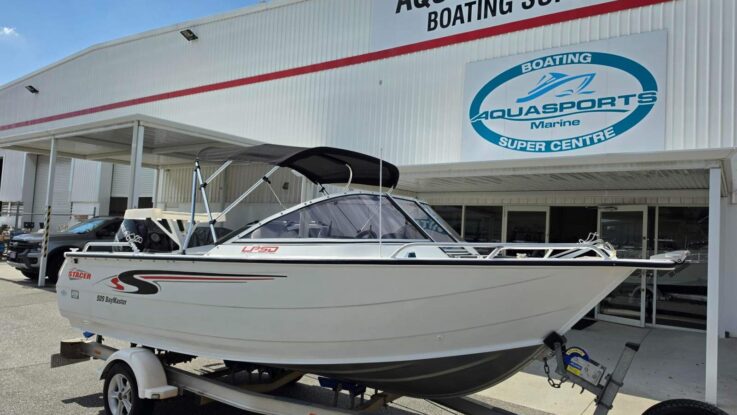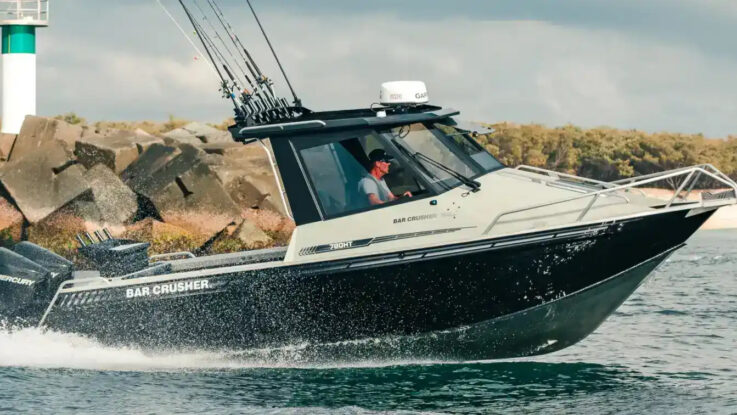






Choosing between Bar Crusher and Quintrex for Western Australia conditions depends on your primary boating environment. Bar Crusher utilizes a deep V design, a heavy plate interlocking sub floor grid, and a water ballast keel cavity to slice through rough offshore ocean chop. Quintrex leverages a stretch formed, variable deadrise hull that maximizes internal beam width, lowers planning speeds, and deflects spray, making it ideal for family all rounders and river or estuary fishing.
Western Australia possesses some of the most beautiful but demanding marine territory in the country. A typical morning run out to Rottnest Island or a run through the Mandurah estuary can start on glass sheets and finish in a two meter swell beaten by twenty knots of southwesterly wind.
Selecting the wrong hull design for these unique challenges results in a punishing ride that compromises structural longevity and passenger safety. To pick the correct platform, you must understand the mechanical differences between pressed aluminum construction and heavy plate fabrication.
The fundamental structural difference between these two legendary Australian brands lies within the manufacturing workshop bay.
Bar Crusher hulls are built around a structural system consisting of deep longitudinal frames and interlocking cross cross-beams. This heavy framework is fully welded directly to premium marine grade plate aluminum bottom sheets.
The entire matrix is capped with a fully sealed, welded aluminum floor grid, creating a rigid structure that resists flexing when pounding through ocean swells.
Quintrex approaches hull engineering by utilizing specialized stretch forming machinery. This process physically stretches marine grade aluminum sheets over precision dies, allowing engineers to shape concave curves into the metal plates.
This stretch forming technique produces shapes that mimic fiberglass hulls, providing smooth, variable deadrise entries that would be impossible to duplicate using standard flat sheet plate fabrication.
Both brands have developed proprietary hull profiles to solve the age old compromise between a soft ride and stability when the vessel is at rest.
The Bar Crusher profile utilizes a deep V design that slices smoothly through chop without bouncing. Deep V hulls are historically unstable when stationary, so engineers added a water ballast cavity along the keel that fills up when the boat stops.
This ballast lowers the outer chines into the water to provide stability while fishing. The moment the throttle is applied, the water jettisons out the back of the transom within seconds, allowing the hull to step onto plane quickly.
Quintrex relies on a sharp, variable deadrise configuration that cuts through water while expanding the chine width forward up the stem line. This design creates a broad footprint that lifts the bow up naturally, allowing for a level running attitude even at lower cruising speeds.
The flared bow configuration catches displaced spray and throws it down and away from the boat, ensuring passengers stay dry when running side on to the wind.

When evaluating these brands, consider how their technical attributes translate to real world handling, durability, and matching outboard power.
| Performance Attribute | Bar Crusher Deep-V Plate | Quintrex Stretch-Formed |
| Primary Construction | Heavy welded plate aluminum | Pressed and stretch formed marine sheets |
| Keel Architecture | Continuous water ballast cavity | Fixed variable deadrise keel line |
| Chop Management | Deep V entry cuts directly through waves | Flared bow deflects spray and lifts naturally |
| Stability At Rest | Achieved via water ballast immersion | Achieved via wide static chine footprint |
| Power Requirements | Requires higher horsepower V6 or V8 blocks | Performs efficiently with mid range four strokes |
| Annual Maintenance | Focus on heavy structural welds and fuel cells | Focus on rivet line tight spots and skin fittings |

Every hull profile involves distinct compromises depending on where you drop your trailer into the water.
[ WA Boating Environments ]
│
┌───────────────────────┴───────────────────────┐
▼ ▼
[ Offshore Ocean Shelf ] [ Rivers, Estuaries & Bays ]
• Heavy Blue Water Swells • Choppy, Short Wind-Chop
• Deep-V Keel Tracking Required • Maximum Deck Space Needed
• Bar Crusher Recommended • Quintrex Recommended
Both hull styles face severe environmental conditions in WA, including high UV exposure and highly corrosive saltwater. Regular upkeep is necessary to preserve their structural integrity.
Heavy plate hulls must be checked periodically for stress fractures along the structural fuel tank brackets and transom joins. Pounding through rough sea conditions at high speeds exerts immense leverage on the transom. An annual checkup at an authorized marine workshop in Canning Vale allows technicians to check critical structural areas using diagnostic tools.
Aluminum hulls are vulnerable to galvanic corrosion if electrical grounding systems are installed incorrectly. Bilge pump connections, dual battery isolation switches, and transducer mounts must be isolated from the aluminum hull skin.
During a standard scheduled Perth boat servicing appointment, technicians use multimeters to check for stray current leaks that can eat through aluminum sheets over time.
Quintrex models are generally lighter than equivalent length plate aluminum boats. This makes them easier to manage with mid size SUVs and decreases fuel consumption on long road trips. Bar Crusher models require heavy duty dual axle trailers and vehicles with substantial braking capacities.
The water ballast cavity is open to the ocean. When navigating shallow sandbars or boat ramps, the ballast empties the instant the boat moves forward. If you need to stop in shallow water, you can close the internal flap system to keep water out or hold ballast inside to add weight in rough conditions.
Modern pressed hulls utilize heavy structural underfloor framing and thick marine grade side sheets to manage structural loads. However, driving any aluminum vessel too hard into vertical head seas can cause stress points over time. Matching your throttle speed to the wave period is critical.
Aluminum underfloor fuel cells can experience condensation buildup if left empty during seasonal changes. Water traps at the base of the tank, causing corrosion from the inside out. Technicians pressure test fuel systems during major service cycles to find these hidden leaks early.
Yes. A fully structured wrap around windscreen provides essential protection against large waves breaking over the bow. It also shields sensitive electronic diagnostic screens, radios, and helm switches from direct saltwater damage.
You should always take your vessel to an experienced boat mechanic in Perth who specializes in marine grade aluminum TIG and MIG welding. Incorrect welding techniques can weaken the surrounding aluminum sheets and create brittle stress lines.
Whether you are running a plate offshore hull or a versatile stretch formed runabout, maintaining structural integrity is the secret to safe ocean travel. Minor weld fractures or electrical grounding issues can quickly escalate into expensive repairs if left unchecked in salt water.
Bring your vessel down to our fully equipped service center. Our factory trained technicians will run full electrical tests, check your structural welds, and inspect your trailer components.
Contact the Aquasports Marine Team Today to book your professional safety inspection.
Before tackling the 19-kilometer ocean crossing from Fremantle to Rottnest Island across Gage Roads...
Read MoreChoosing between a Yamaha and a Mercury four-stroke outboard depends on your specific hull design, ...
Read MoreLooking for a reliable used boat in Perth without spending more than you need to?Whether you're...
Read MoreNothing ruins a day on the water faster than an outboard motor that refuses to start or suddenly lo...
Read MoreYour next boating adventure should begin with confidence, not unexpected engine trouble. Whether yo...
Read More